
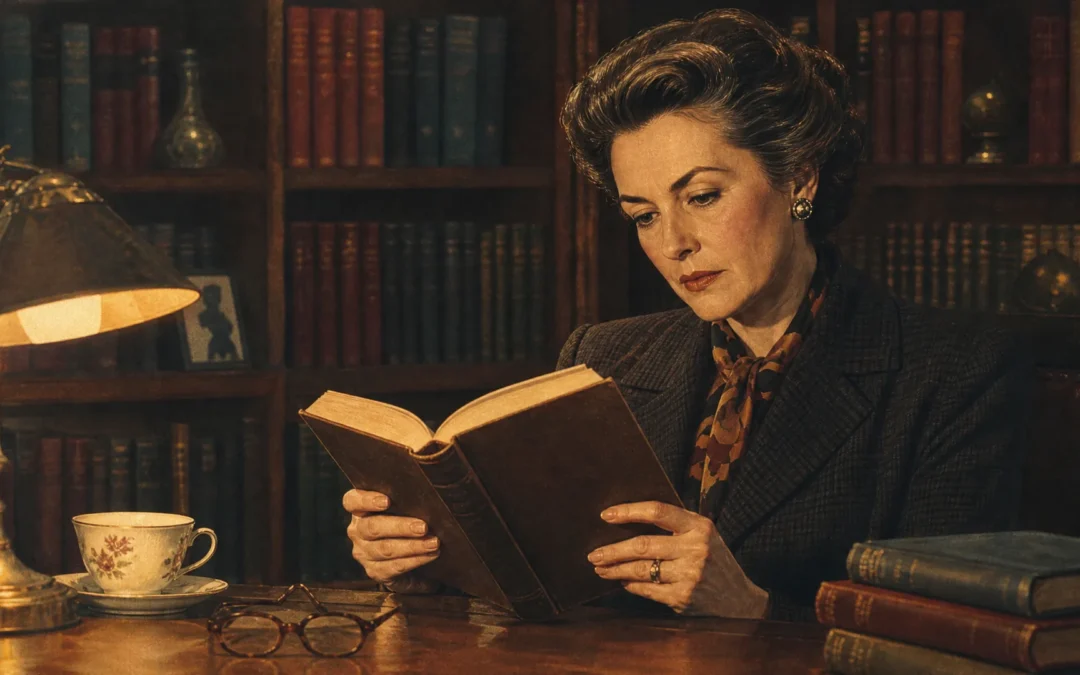
Type “books for women over 40” into any search bar and you’ll get the same tired lineup: a few self-help titles, a book club darling or two, maybe a romance novel with a beach on the cover. Somewhere near the bottom, a handful of mysteries get tossed in almost as an afterthought. If you’ve spent decades reading Christie, Sayers, and the rest of the genre’s great architects, that kind of list probably feels a little insulting. You’re not looking for “clean fiction” or “uplifting reads.” You want mystery novels written for women readers over 40 who actually know the genre and want something worthy of their shelf.
Why Generic ‘Books for Women Over 40’ Lists Miss the Mark for Mystery Lovers
Most of these lists come from an algorithm, not from anyone who reads mysteries seriously. They lump genres together based on demographic guesses rather than literary taste. The result treats mystery readers as an afterthought, as if plotting and character depth matter less than a book simply being “for women.”
That approach ignores what makes mystery fiction its own demanding, rewarding category. A reader who has spent forty years with detective novels wants structure, fair-play clues, and a protagonist worth following across many books. Not just one clever twist.
What Mature Women Mystery Readers Actually Want From a Series
Mature women mystery readers want plotting that respects their intelligence. They want protagonists who have lived a little, who carry grief and history and hard-won judgment rather than just quick wit and a gun.
They also want continuity: a series they can sink into over a year, not a standalone thriller they finish in a weekend and immediately forget. That’s a different appetite entirely from what most generic recommendation lists serve.
What Makes a Mystery Novel Resonate With Readers Over 40
The mystery novels that stick with readers at this stage of life tend to share a few qualities. They favor emotional intelligence over shock value. They lean into history or literary allusion rather than pure adrenaline. And their protagonists tend to reflect real life experience rather than youthful fantasy.
The Case for Older, Wiser Protagonists
Readers who grew up on Agatha Christie and P.D. James often age out of thriller-heavy modern crime fiction. They start seeking series with slower-burn plotting, richer historical texture, and protagonists who reflect their own life stage rather than twentysomething amateur sleuths.
An older, wiser protagonist brings something a fast-paced thriller rarely can: perspective. She’s made mistakes. She’s buried people she loved. She reads a room the way only someone with decades of practice can. That’s not a limitation on the plot. It’s often what makes the plot land.
Series Depth Over Standalone Thrills
There’s also a structural preference at play. Many readers over 40 don’t want a single satisfying mystery. They want a world they can return to, book after book, with a reading order worth following and characters who grow across volumes.
This is part of why long-running series with a clear reading order tend to outperform standalone bestsellers with this audience. The investment pays off differently. You’re not just solving one case. You’re spending years with someone whose company you enjoy.
Sophisticated Adult Mystery Series Worth Your Shelf Space
If you want proof that this appetite is real, look at what’s already thriving on readers’ shelves. Sophisticated adult mystery series with strong series bones have built devoted followings for decades, and they show no sign of losing readers.
Classic and Contemporary Series With Staying Power
Series like the Maisie Dobbs novels, the Amelia Peabody mysteries, and Anne Perry’s Victorian detective books have built loyal followings among readers in their 40s, 50s, and beyond. They combine intricate plotting with emotionally mature protagonists. That’s exactly the combination generic listicles fail to capture.
These series work because they never talk down to their readers. They trust you to hold multiple plot threads, remember earlier books, and appreciate a protagonist who ages and changes convincingly across a long arc. That trust is rare, and readers notice when a series extends it to them.
Where Victorian and Edwardian Settings Fit In
Historical settings, particularly Victorian and Edwardian ones, do something specific for this readership. They offer distance from contemporary anxieties while still delivering the moral complexity and social texture that makes mystery fiction feel substantial.
It’s no accident that so much of this genre’s most beloved work is built around strong female characters in Victorian detective fiction. The era’s rigid social codes give a sharp, capable heroine something real to push against. That’s part of why these settings remain so popular with readers looking for mystery novels where a female detective takes the lead. Readers drawn to this blend of period detail and smart heroines often find their way, too, to historical cozy mysteries with smart heroines, a closely related shelf worth exploring.
Sherlock and Lucy: A Mystery Series Built for the Sophisticated Reader
This is exactly the gap the Sherlock and Lucy series was written to fill. It wasn’t built as a generic “book for women.” It was built as sophisticated adult mystery fiction that happens to feature a woman worth following for the long haul.
Lucy James as a Protagonist Who Reflects Real Maturity
Sherlock and Lucy was built from the ground up around a mature female protagonist. Lucy James, Sherlock Holmes’s daughter, offers a perspective grounded in real judgment rather than ingenue charm. Her position as Holmes’s previously unknown daughter gives her both authority and vulnerability. Seasoned mystery readers recognize that combination as earned, not manufactured.
Co-authors Charles Veley and Anna Elliott have spoken about deliberately writing Lucy as a woman whose intelligence and independence would resonate with readers who want a heroine who feels like a peer. Not a fantasy ingenue, but someone whose choices you’d trust in your own life.
How the Series Honors the Canon While Adding New Depth
What sets this series apart from a generic spinoff is its respect for the source material. It doesn’t rewrite Holmes to make room for Lucy. It expands the world he inhabits, layering new relationships and mysteries onto a canon that Conan Doyle fans already know intimately.
That balance, reverence for the original stories alongside real narrative expansion, is precisely what canon-aware readers want. If you want to understand the thinking behind that balance, the authors behind Sherlock and Lucy have written openly about the choices that shaped Lucy’s voice and her place in Holmes’s world. It’s also part of a larger shelf of adult mystery series set in Victorian detective fiction, for readers who want to see how this series fits alongside the era’s other great detective stories.
How to Start (and Stay With) a Mystery Series in Your 40s and Beyond
Committing to a long-running series can feel like a lot, especially if you’ve been burned before by a series that lost its footing after book three. But there’s a straightforward way to approach it that keeps the commitment manageable.
Finding the Right Reading Order
Start with the reading order, not with whatever book happens to be on sale. Series built on continuity reward readers who begin at the beginning, since character relationships and plot threads carry forward book to book.
For Sherlock and Lucy specifically, where to start with the reading order is the simplest way to enter the series without missing the connective tissue that makes later books resonate. It’s a low-friction way to test whether the series is the right fit before committing to the full run.
Signs a Series Will Reward Long-Term Investment
A few signals tend to predict whether a series is worth years of your reading life. Does the protagonist grow across books rather than staying static? Does the plotting reward attention rather than lean on shock twists? Does the historical or literary texture feel researched rather than decorative?
If a series checks those boxes, it’s usually worth the investment, in your 40s and beyond. That’s the standard mystery novels written for women readers over 40 deserve, and it’s the standard a series like Sherlock and Lucy was written to meet.
Recent Comments