
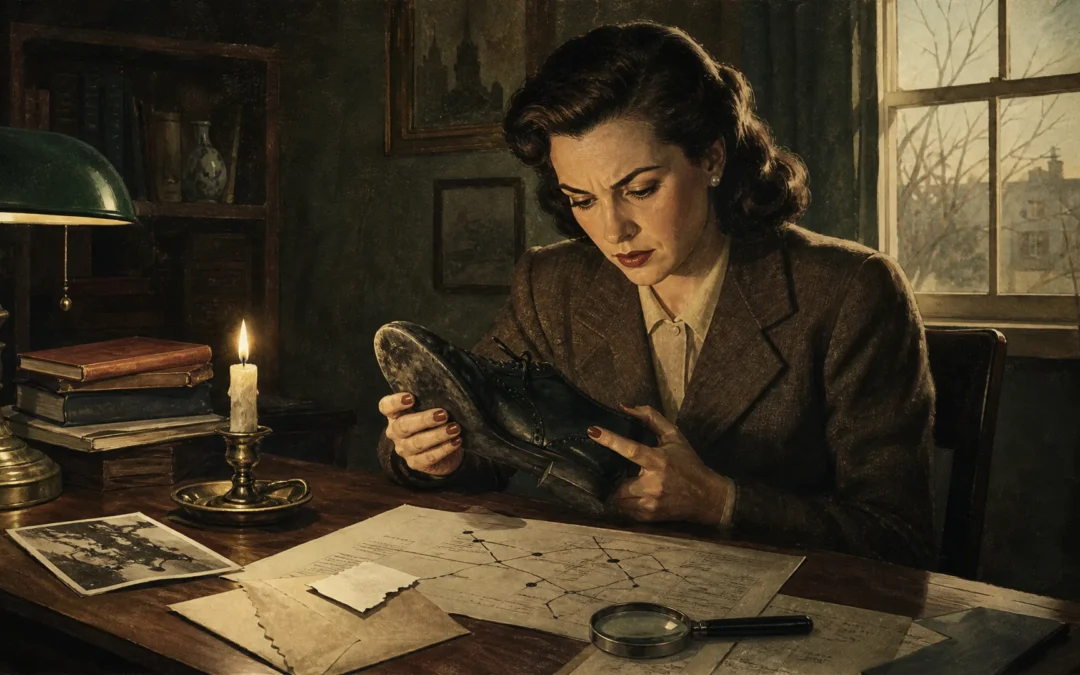
If you’ve spent any time searching for your next great read, you’ve probably noticed most “cozy mystery” lists look the same: a baker or a librarian stumbles onto a body, a cat helps solve the case, a love triangle simmers in the background. Nothing wrong with that formula. But if you came looking for cozy mysteries with a historical setting and smart heroines, you want something with more backbone. Atmosphere you can sink into. A protagonist whose mind, not her luck, cracks the case. That’s the book we’re writing here, and it’s the kind of reading experience that deserves its own map.
What Makes a Cozy Mystery “Smart”, And Why It Matters
A cozy mystery earns its name through tone: low violence, a strong sense of community, enough wit that you can read it before bed without nightmares. But “cozy” describes mood, not intelligence. The best entries in the genre pair that comfort with a heroine who reasons her way through a puzzle, page by page, clue by clue. That distinction matters more than most search-result round-ups let on, because plenty of “cozy” lists lump in books where the mystery solves itself around the heroine rather than because of her.
Defining Intelligent Protagonist Mystery Series
An intelligent protagonist mystery series builds its tension from deduction. The heroine notices the detail everyone else missed, a scuff on a shoe, a contradiction in a witness’s story, a gap in a timeline, and she follows it methodically. She isn’t handed answers by a conveniently chatty suspect. She earns them. That’s the throughline connecting the best historical cozy mysteries, and it’s worth watching for as you sample new series.
Cozy vs. Hard-Boiled: Where Historical Detective Cozies Fit
Hard-boiled detective fiction trades in cynicism, violence, moral ambiguity. Cozy mysteries sit at the other end of the spectrum, favoring puzzle-solving over grit. A historical detective cozy threads a particular needle: it keeps the gentler tone and the fair-play puzzle structure of a cozy, but grounds it in a real, researched past, often Victorian or Edwardian London, where social rules, class, and gender expectations become part of the mystery’s texture. The heroine isn’t just clever in the abstract. She’s clever within the constraints of her era, and that raises the stakes when she outmaneuvers them.
Reader Profile: Who Loves Historical Cozy Mysteries With Smart Female Leads
Picture the reader who finished every Conan Doyle story years ago and still wants more of that world. She’s often 35 or older, drawn to historical fiction as much as mystery, and she has little patience for a heroine defined mainly by her romantic prospects. She wants period detail she can trust, dialogue with some snap to it, a lead character who could hold her own in a room full of Scotland Yard inspectors. If that sounds like you, you’re exactly who we had in mind. Readers like this also tend to enjoy historical fiction set in London around the turn of the century as much as they enjoy the mystery itself. No hard sell here, just a recognition that this particular readership has been underserved by generic listicles that assume “cozy” and “light” are synonyms.
Hallmarks of Sophisticated Mystery Novels for Women Readers
Sophisticated mystery novels for women readers share a handful of traits that separate them from the crowded cozy shelf. They respect the reader’s intelligence as much as the heroine’s.
Period Detail That Feels Lived-In
The setting has to feel inhabited, not decorative. Gaslight, fog, and hansom cabs are set dressing unless the author also understands how a woman moved through Victorian or Edwardian society: what she could say aloud, what she had to imply, where she was allowed to go alone and where she wasn’t. That texture is what makes the amateur detective’s cleverness feel earned rather than anachronistic.
Heroines Who Out-Think Everyone in the Room
The best historical heroines don’t just participate in solving the mystery. They lead it. They spot the lie in a butler’s alibi. They connect a chemistry lesson to a poisoning. They read a room the way Holmes read a crime scene. This is where “sophisticated” earns its keep: substance over cute gimmicks, a heroine you’d trust to actually solve a real case, not just stumble into the solution because the plot needed her to.
Series and Characters That Set the Standard
Classic Touchpoints in the Genre
A few series have quietly become the benchmark for smart heroines in historical mysteries. Amelia Peabody, the Egyptologist-detective, solves crimes with the same rigor she brings to archaeology. Maisie Dobbs applies psychological insight and wartime experience to cases that unfold across interwar England. The Lady Sherlock series reimagines Sherlock Holmes’s methods through a heroine who has to hide her own genius behind a male alias just to be taken seriously. Each of these series proves the same point: readers keep coming back to heroines whose intellect drives the plot, not incidental sleuthing that happens to her.
Where Lucy James Fits Among Them
Lucy James, Sherlock Holmes’s previously unknown daughter, belongs in that same conversation. She’s part of a broader trend: intelligent, historically grounded heroines who solve cases through deduction rather than luck or romance subplots. If you want to know more about her origins and role in the series, you can meet Lucy James, Holmes’s daughter and the series’ lead detective and see how her methods echo, and expand on, her father’s. The Sherlock and Lucy series is co-written by Charles Veley and Anna Elliott, a dual-author collaboration that blends period research with plotting craft, and it’s the kind of structure more readers are actively seeking out as the genre matures. That same appetite for capable, independent heroines runs through series featuring female detectives who solve cases on their own merits, a wider shelf worth exploring once you’ve found your footing here.
How to Start Reading a Historical Detective Cozy Series
Starting a long-running series can feel daunting, especially one with historical continuity and recurring characters. A few things make it easier. First, check whether the series is arc-driven or built from standalone cases: arc-driven series reward starting at the beginning, while standalone entries let you dip in anywhere. Second, look for a reading order guide before you commit, especially for continuation fiction tied to an existing canon like Sherlock Holmes, where timeline and character development matter. If you’re curious about Sherlock and Lucy specifically, the smartest move is to start the series in the right order rather than guessing. That’s also a good moment to sign up for updates on new releases, since these series tend to expand over time and it helps to know when the next case lands.
Readers who want more genre context before diving in might also enjoy a broader guide to Victorian detective fiction for adult readers, which lays out how this corner of historical fiction has developed. And if strong female characters are your main draw, there’s a deeper look at strong female characters across Victorian detective fiction that maps the terrain beyond any single series.
FAQ: Historical Cozy Mysteries With Smart Heroines
What defines a cozy mystery as “historical” versus contemporary?
A historical cozy mystery is set in a past era, often Victorian or Edwardian, and its plot, dialogue, and social stakes are shaped by that period’s real constraints, rather than simply borrowing costumes for a modern-feeling story.
What makes a mystery heroine feel genuinely intelligent rather than just lucky?
She reaches conclusions through visible reasoning: noticing details, testing theories, following evidence, rather than having the solution handed to her by convenient coincidence or a talkative suspect.
Which classic series are considered benchmarks for smart heroines in historical mysteries?
Amelia Peabody, Maisie Dobbs, and the Lady Sherlock series are widely regarded as genre touchpoints, each built around a heroine whose intellect drives the story.
Are these books appropriate for readers new to Sherlock Holmes continuation fiction?
Yes. Readers who love the original Conan Doyle canon often say they want continuation fiction that respects the source material while giving it a fresh angle, such as a female-led perspective. That’s exactly the entry point continuation series like Sherlock and Lucy offer.
What’s the difference between a cozy mystery and a Victorian detective novel?
A cozy mystery is defined by tone: gentle, low-violence, community-centered. “Victorian detective novel” describes a setting and genre tradition. A historical detective cozy combines both: cozy tone, Victorian-era substance.
Where should a new reader start with the Sherlock and Lucy series?
Begin with the first book in publication order rather than jumping in at random, since the series builds Lucy’s development and her relationship with her father over time. A dedicated reading order guide makes this simple to follow from the very first case.
Recent Comments