
If you’ve ever finished the last page of Arthur Conan Doyle’s canon and found yourself asking what happened to Sherlock Holmes after that final story, you’re in good company. Doyle gave his detective a proper send-off, but he never told us how the story actually ends. That gap has haunted, and inspired, readers for over a century.
Sherlock Holmes’s Canon Timeline After Doyle’s Final Story
To understand what Doyle did and didn’t tell us, it helps to separate two different timelines: the order in which the stories were published, and the order in which they happen inside Holmes’s life. They are not the same thing. Confusing them is where a lot of the mystery about Holmes’s later years begins.
When Doyle Stopped Writing About Holmes
Doyle’s last published Holmes story was “His Last Bow,” which appeared in 1917. It’s set on the eve of the First World War, with Holmes coming out of retirement for one final piece of espionage work. After that story, Doyle wrote no further Holmes adventures set later in the detective’s life. He did publish The Case-Book of Sherlock Holmes afterward, but those stories loop back to earlier, unrelated cases from Holmes’s active career. In terms of Holmes’s own chronology, “His Last Bow” is where the story stops moving forward.
What “His Last Bow” Actually Tells Us
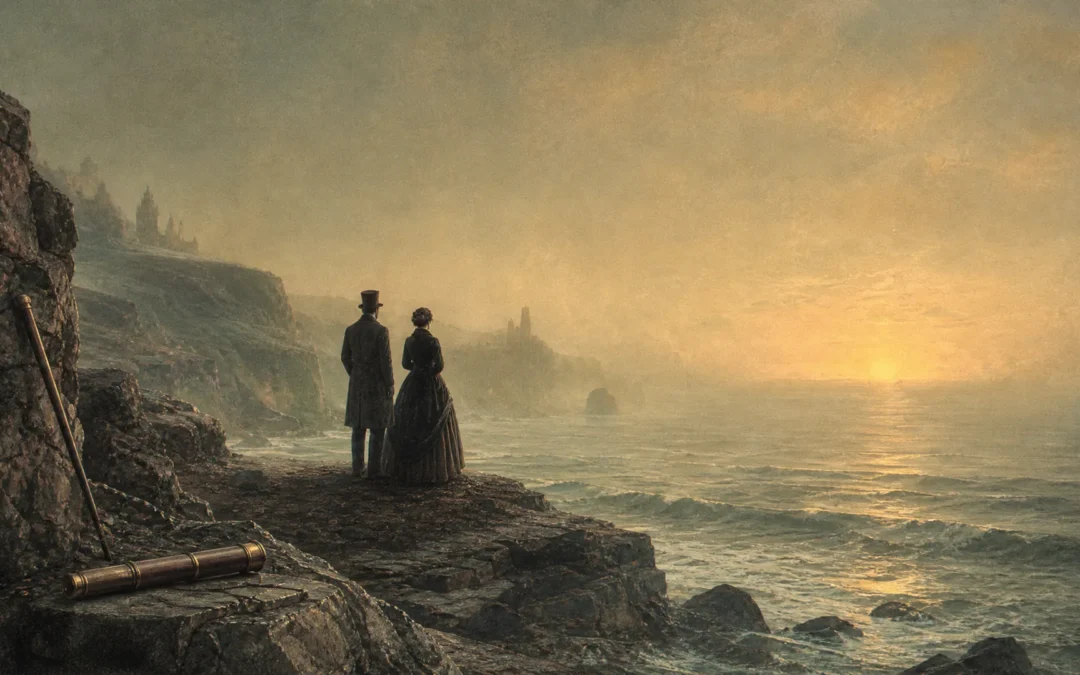
The story closes with Holmes and Watson standing together, watching dawn break over the English coast as the world edges toward war. It’s a quietly moving scene, and Doyle clearly meant it as a farewell. But it’s a farewell to a moment, not a full ending. Holmes doesn’t retire again on the page. He doesn’t age further in front of us, and he doesn’t get a final scene that resolves his life story. Doyle simply stopped writing, and Holmes was left there, on that cliff, permanently on the edge of what came next.
Holmes’s Life After His Final Case, According to Doyle
So did Doyle ever tell us what happened to Holmes after he retired for good? Not really. What little he did share came earlier, almost as an aside.
The Sussex Downs Retirement
The clearest picture we get of Holmes’s retirement doesn’t come from “His Last Bow” at all. It comes from “The Adventure of the Lion’s Mane” and from Doyle’s own preface to The Case-Book of Sherlock Holmes. There, Doyle sketches a small cottage on the Sussex Downs, where Holmes has apparently already retired well before the events of “His Last Bow.” It’s a modest, almost throwaway detail: a few lines describing the location rather than a scene that dramatizes it.
Beekeeping, Writing, and Quiet Retirement
In that same handful of references, Doyle tells us Holmes took up beekeeping and was reportedly working on a monograph on the art of detection. That’s it. No description of his daily life, no account of visitors, no sense of how long this retirement lasted or how it ended. It’s the literary equivalent of a postcard rather than a chapter, enough to confirm Holmes settled somewhere quiet, and almost nothing else. This sparse sketch is the entirety of what counts as official canon on Holmes’s later years. Doyle gave us a location and a hobby, and then moved on.
Why Doyle Left Holmes’s Later Years Unresolved
It’s worth asking why Doyle stopped there, though any answer is speculation, not settled fact.
By the time Doyle wrote “His Last Bow,” he had spent decades with Holmes, on and off, and had famously tried to kill the character off once already at Reichenbach Falls, only to bring him back under pressure from readers. It’s plausible that Doyle, worn out by his own creation, had little appetite left for chronicling Holmes into old age. The story is also set explicitly against the backdrop of the First World War, a moment when Doyle, like much of Britain, had far weightier things on his mind than a detective’s retirement plans.
There’s also a case to be made that Doyle chose ambiguity on purpose. Ending Holmes’s story with a clear death, or a fully resolved retirement, would have closed a door Doyle may have wanted to leave open. Instead, he gave readers a dawn scene full of quiet dignity and let the rest of Holmes’s life stay just out of reach. Whatever the reason, the effect is the same: Doyle handed future writers an unfinished sentence, and generations of them have been tempted to finish it.
How Continuation Fiction Picks Up the Sherlock Holmes Timeline After Doyle
That unfinished sentence is exactly why the Sherlock Holmes timeline after Doyle has become such fertile ground for other writers. If Doyle had spelled out every detail of Holmes’s later years, there would be little room left to imagine. Because he didn’t, the retirement cottage on the Sussex Downs has become one of the most revisited settings in all of Holmes-inspired fiction.
Pastiche vs. Continuation: Different Approaches to the Gap
Not every writer who has picked up where Doyle left off has done it the same way, and the distinction matters if you’re trying to make sense of Holmes’s later years as a body of work rather than a single story. Some authors write pastiche: stories that imitate Doyle’s voice and drop new cases into gaps within the existing canon, often without much concern for a larger, ongoing timeline. Others write continuation fiction, which treats Holmes’s life as an unfolding story that can genuinely move forward past “His Last Bow,” building on what Doyle established rather than simply echoing it. Understanding the difference between pastiche and continuation fiction helps explain why some post-canon Holmes stories feel like variations on a theme, while others feel like the next real chapter.
Writers going back decades, Nicholas Meyer among the more famous names, alongside more recent estate-sanctioned authors working from the Baker Street tradition, have generally treated the years after 1914 as an invitation rather than a problem to solve. Done carefully, new casework can sit alongside Doyle’s stated facts without ever contradicting them.
Where Sherlock and Lucy Fits Into Holmes’s Later Years
The Sherlock and Lucy series takes the continuation approach, and it does so through a character Doyle never wrote: Holmes’s previously unknown daughter, Lucy James. Rather than rewriting or overturning “His Last Bow,” the series extends Holmes’s story forward into Edwardian London, using Lucy James, the canon’s heir as the lens through which readers see what Holmes’s later years might have looked like. It’s an approach very much in keeping with a broader tradition of exploring Holmes’s daughter in continuation literature: imagining family Doyle never mentioned, without contradicting anything he actually wrote. The Sussex retirement, the beekeeping, the quiet closing image of “His Last Bow,” none of it gets undone. It just gets a sequel.
Exploring Holmes’s Retirement Canon for Yourself
Doyle left us with a cottage, some bees, and a dawn over the Channel, and precious little else. That’s a small canvas, but it’s exactly why so much has been painted onto it since. If you want to keep following Holmes’s story past the point where Doyle set down his pen, where to start reading the continuation series is a natural next step. For a wider view of what else is out there, it’s worth looking at the best Holmes books for fans of the original canon as well as the broader shelf of continuation novels worth reading. Doyle gave Holmes a dignified pause. What comes next is up to the readers willing to keep turning pages.
Recent Comments